
People, my new costuming tricks are all about dressing my alter ego. But my old ones were costuming for theatre shows.
So, recently I've done a tiny bit of costuming. Basically I am a sort of shadowy resource who has tried, and sadly failed, to remain anonymous at a local community theatre.
My contributions are generally millinery, but a couple times I've busted out something more. Here's a breakdown:
Pride and Prejudice:
This is how it all began. I got wind of a production and offered to insert headgear, as it always gets overlooked but I think it is more important than dresses for setting the scene and tone. (grr, looking at you, Bridgerton)
All of these hats are made from a range of cheap hat types - bowling fedoras, bowlers, molded plastic "top hats" you name it. I now keep a supply on hand just in case. They are useful as they have the crown to brim join already made.
Full bonnets are no good in the Gryphon theatre which has steep lighting lines so they'd cast shadows on faces. So these are all back of head types.
 |
| Lady Catherine de Burgh's extravagant tall hat. She was wearing purple and orange so I figured, get in there and lean in on the crazy! It won an award for the best showstopper of the year! |
 |
| A wee ruched velvet hat, and a shallow bonnet. That was the only straw hat I could find, hence the other solutions I found to the hat making process. |
 |
| I think this is my favourite. No idea what I based it on! It has a lovely pleated lining though. |
 |
| Another ruched hat with turban vibes and ostrich feathers. |
 | |
| A little cutie based on a very cheap white top hat. Silk taffeta with organza and fake flowers. It also has a gorgeous pleated lining. |
Gabriel
Set in the Channel Islands during WW2 occupation, Gabriel the play needed a period credible brassiere. Trouble is, the wearer would have worn a binder style bra, not the dainty peach and lace ones we love to think of, so I decided stuff it, and built a pretty one on top of a modern skin tone bra.
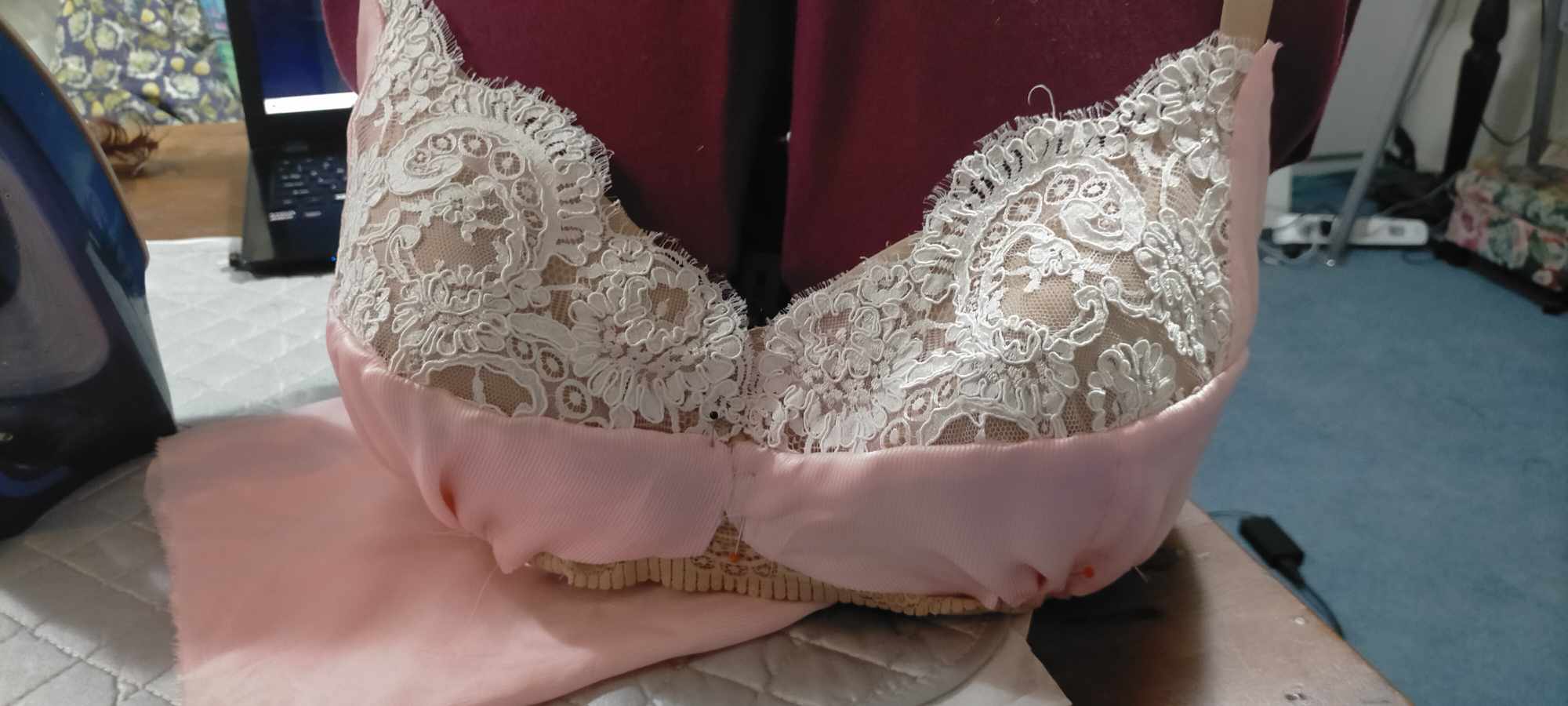 |
| For the 4 seconds it is on display, I think it would have gotten the idea across. Lightweight silk I overdyed with food colouring as it was a bit wishy washy, and chantilly lace from my stash also dyed with food gels. |
Persuasion
Persuasion just closed after a sell out season. A mammoth effort that was costumed from scratch. I was asked to make a bicorne,and also ended up making a second, not shown.


This is made from a black $12 sombrero - I reduced the crown down, steamed it into shape, covered it in felt using Steamaseam, bound it with black bias then glued on authentic metallic trims. The metallic trim is too heavy for a machine and I knew the stitches would be super obvious from the back row. And no way was I sewing this on through all that nasty synthetic.
So, it turns out my lovely friend Janet was also cast in it and so I undertook to make her overcostume too. She doubled as Lady Russell and Mrs Musgrove. The show wasn't trying to be super authentic, but it definitely captured the vibe, I feel. Sadly my pleas to incorporate shawls and bonnets weren't taken up due to the seamless style of it all, no time for transitions - but I DID get headwear onto my friend.
 | |
| The only thing I made in this image is the cap Janet is wearing (second from right) but don't you love the puppets for the annoying Musgrove Children! The rest were made by a local lady who is incredibly clever, and had a month to do nothing else. The things people do for community theatre...Anyway cap made from self stripe silk organza and a couple of other laces. The Dreamstress donated some lacy offcuts for this, thank you as always! |
 |
| Funny, Janet is in the same position in this pic as the last, but this time as Lady Russell. I made her red overdress and turban. The fabrics are velvet and a heavy Indian cotton with metallic crewel embroidery. Everything Janet wore has come back to me and that dress is going to become a jacket at some stage! |
And that's my foray into theatre costuming! I did assist with another professional production but I'm not spilling the beans on that one!


